

Sofia Walking Tour
A City That Grew for 7,000 Years and Never Got Old

Hey My Journey Companions!
📍 I’m still in Petah Tikva, Israel, spending time with family and feeling more at home than anywhere in the world.
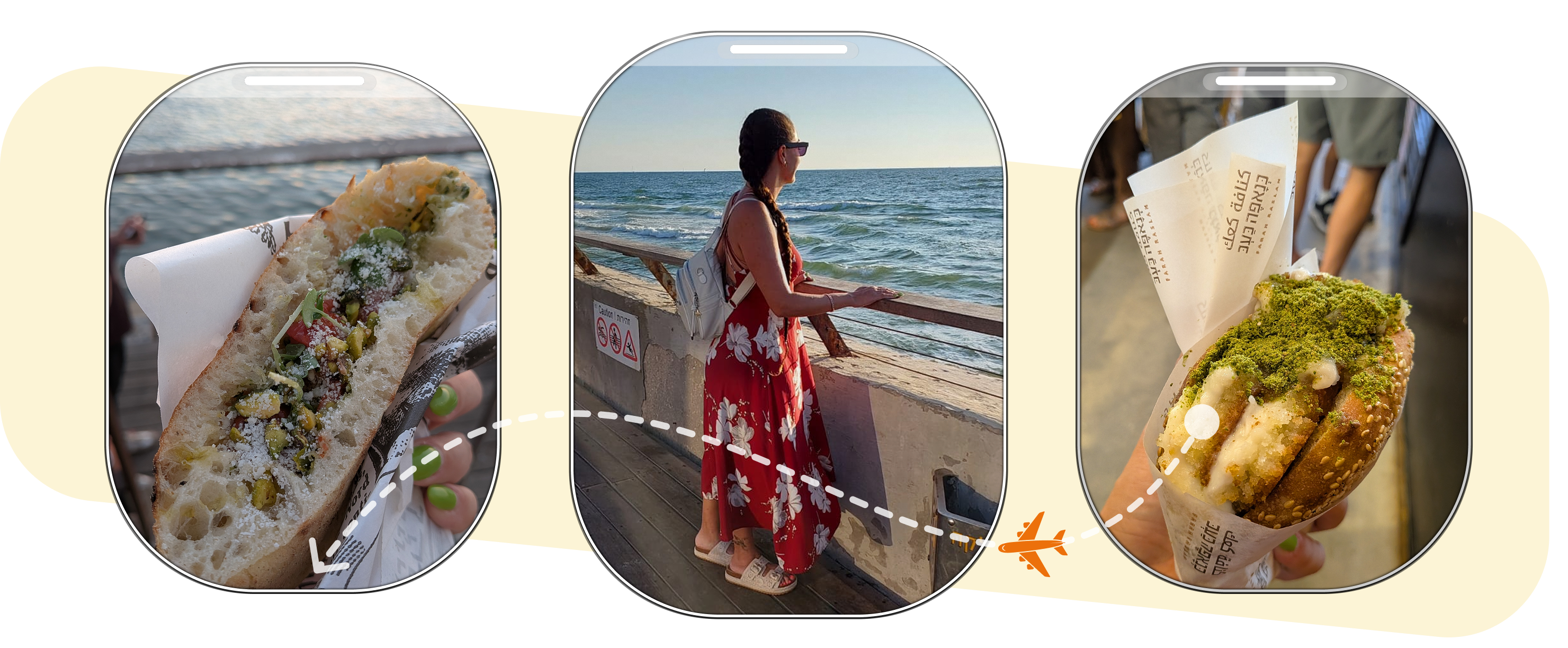
This week I made it to the food market at Tel Aviv Port, and ate the knafeh I’ve been waiting to eat for four years.
Four years, and four times I showed up to this place — once it was closed, once the owner was on reserve duty, once they ran out of knafeh. And this time, finally, I tasted the sweetness of persistence.
It was a meaningful bite for me. Because yes, my relationship with food is complicated. Apparently maybe too complicated.
“You take food too seriously, lighten up,” my brother told me, after I revealed that I like to eat in a very specific way.
And I like to think that everyone has their little quirk, the small nuance they love doing. The kind that doesn’t really affect anything except how it feels — and that’s exactly what makes it special.
The kind that even if robots replace us someday, you’d be able to identify them by these missing nuances — the ones that have no real significance, except for the most important sign of all: that we’re human.
This week I’m taking you with me to the moment I understood why Israelis feel at home in Sofia — and it had nothing to do with the Hebrew signs at the airport.
The guide said something at the start of the tour that stayed with me all day.
“Sofia is over 7,000 years old. Its motto is ‘grows but does not age.’ Because an old city feels heavy. An ancient city — knows what it is.”
I paused with that for a moment.
A city that knows what it is. 7,000 years of knowing.
First Layer: The City Beneath the City
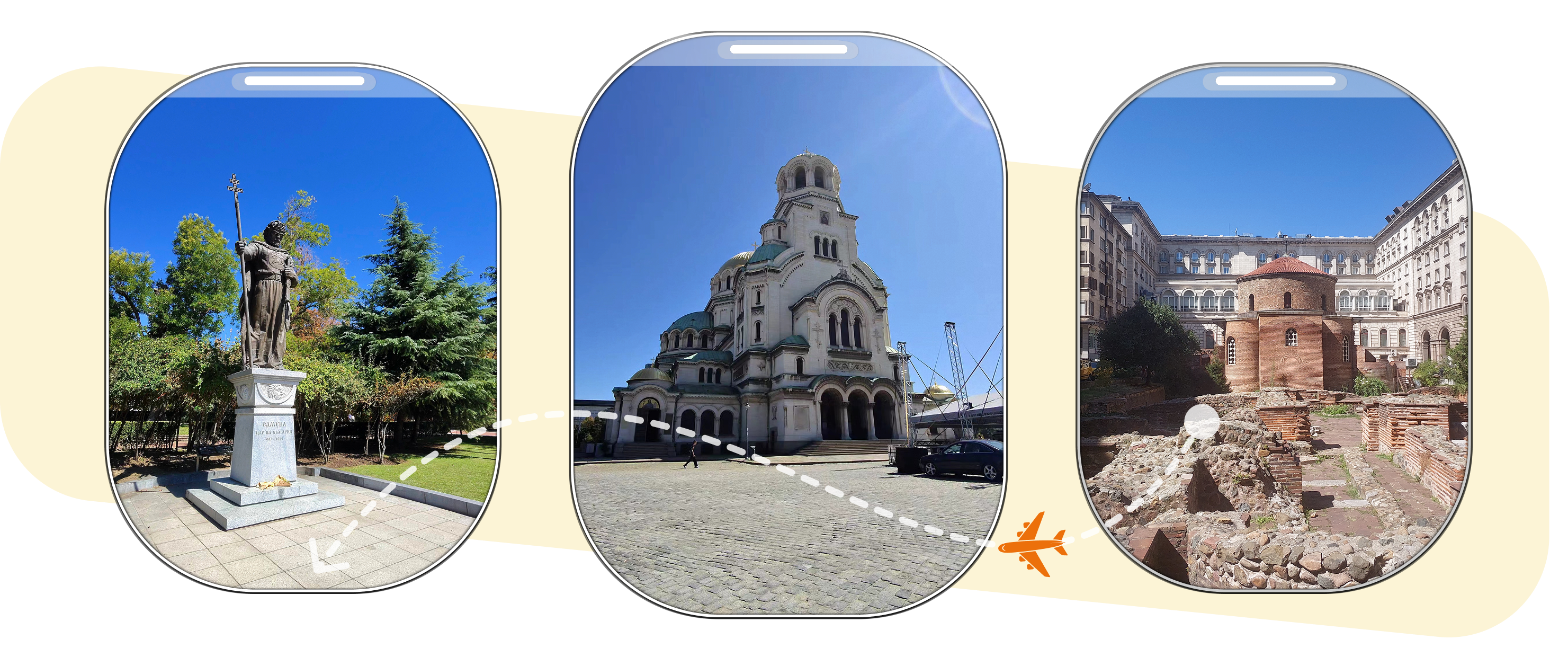
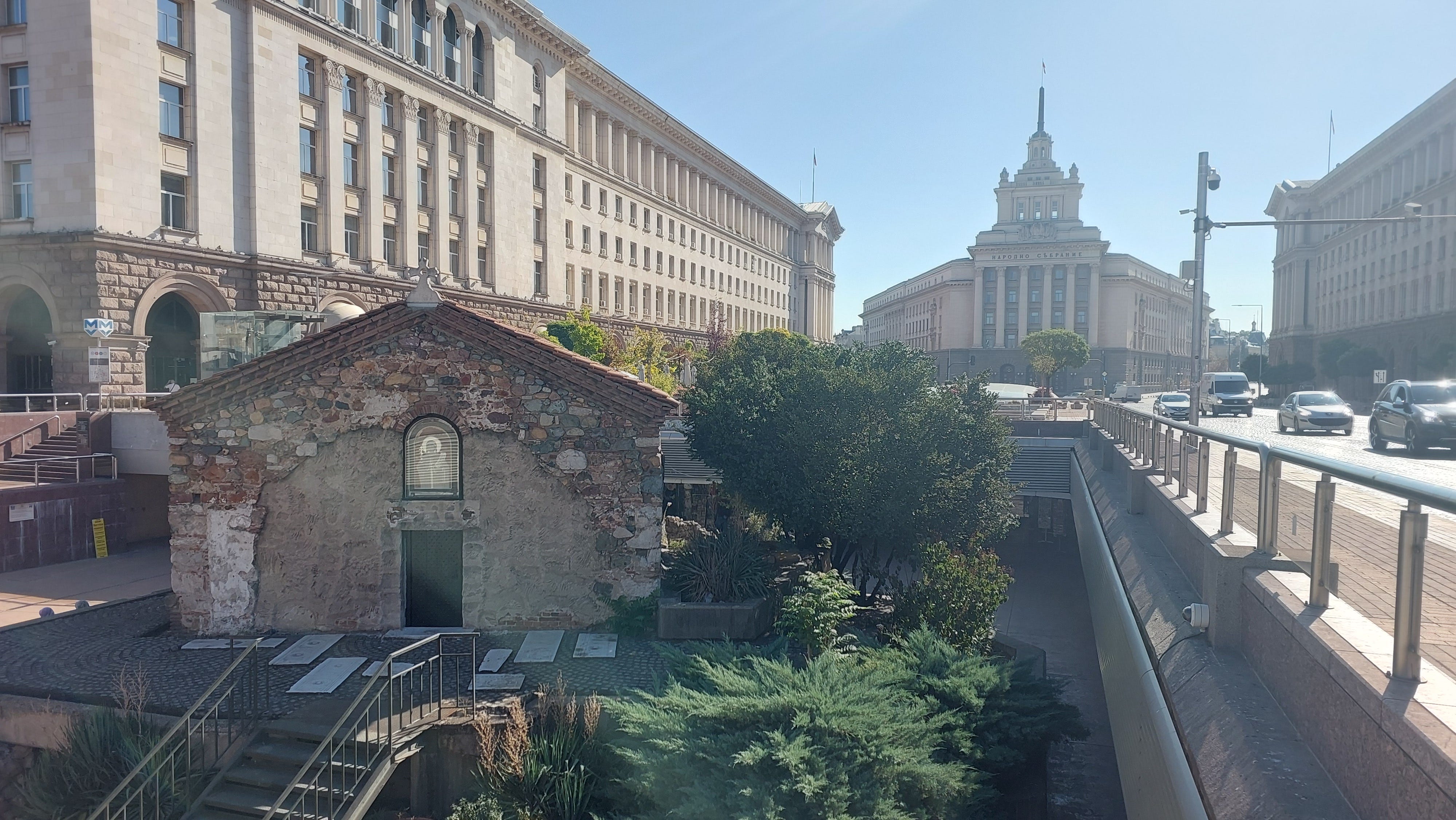
One of the first things the guide pointed to was the ruins of Serdica — the Roman city that Sofia was built on top of. Not in a museum. On the street. In the metro. Under glass, under the floor, right there.
The modern city sits directly atop the ancient Roman city of Serdica, with remarkably well-preserved ruins — including streets, buildings, and mosaics — integrated into public spaces like the Serdica metro station.
7,000 years of knowing, layer by layer.
And then we reached the point where everything shifted for me.
Second Layer: The Church, the King Was Late To
At the center of the city stands St. Nedelya Church — and not just a beautiful church. It carries a story I couldn’t stop thinking about.
On April 16, 1925 — Maundy Thursday — the church was bombed during the funeral of General Konstantin Georgiev, who had been assassinated two days earlier by the military wing of the Bulgarian Communist Party. Twenty-five kilograms of explosives had been smuggled into the church’s attic, and the detonation brought down the main dome onto the congregation below.
213 people were killed and around 500 were injured — among them twelve generals, fifteen colonels, members of parliament, the mayor of Sofia, and ordinary worshippers who had come to pray. It remains the deadliest terrorist act in Bulgarian history and one of the largest in Europe in the twentieth century.
But the real target had been Tsar Boris III, who was supposed to be there.
He wasn’t. He arrived late.
Boris III had been attending the funerals of companions killed in an assassination attempt against him two days earlier — and in doing so, narrowly escaped the church bombing by sheer coincidence of timing.
From that day forward, Bulgarians believe that being late brings good luck.
I stood in front of the church and couldn’t help smiling to myself. There’s something in that gentle cynicism — turning tragedy into folk wisdom — that felt very familiar to me as an Israeli.
Third Layer: A Square Unlike Any Other
Four buildings. A mosque, an Orthodox church, a Catholic church, and a synagogue. All within a few minutes of each other.
The guide explained: this isn’t a coincidence. It’s evidence that in Sofia, different communities lived side by side — not always in harmony, but together. In a way that in many other parts of the world meant walls, not proximity.
By the end of the Ottoman period, Sofia’s population was 56% Bulgarian Christian, 30% Jewish, 7% Turkish, and 6% Roma — all in one city.
The Square of Religious Tolerance. That’s what they call it.
Fourth Layer: The Moment I Understood the Hebrew Signs
The story the guide told about World War II is, without question, the most important thing I learned in the entire tour.
Bulgaria entered the war on Germany’s side, under heavy pressure, with limited choice. At the time, roughly 48,000 Jews lived there. In 1943, the government secretly signed an agreement with the Nazis for their deportation.
The information leaked.
When pro-Nazi bureaucrats in Sofia began planning to round up the Jews of Bulgaria proper, details of the secret plan were leaked — sparking terror and defiance.
Metropolitan Kiril of Plovdiv arrived at the train station with 300 church members, where Jews were packed into boxcars. He pushed through SS officers, opened one of the cars, and — according to some accounts — called out a verse from the Book of Ruth: “Wherever you go, I will go. Your people will be my people, and your God, my God.”
He then walked to the front of the train and declared he would lie across the tracks if it moved.
And Metropolitan Stefan of Sofia — who backed Kiril throughout — sent a letter to the Tsar that read: “Do not persecute, so that you yourself will not be persecuted. The measure you give will be the measure returned to you.”
By the end of World War II, Bulgaria’s Jewish population had grown from 48,000 to 50,000 — making it the only country under Nazi rule to end the war with more Jews than it began with.
Both Metropolitan Kiril of Plovdiv and Metropolitan Stefan of Sofia were recognized in 2002 as Righteous Among the Nations at Yad Vashem.
I stood there and absorbed all of this.
When I landed in Sofia, I saw Hebrew signs at the airport. I heard Israelis in the streets. I felt a warmth from the city that I hadn’t expected and couldn’t explain.
Now I understand.
Fifth Layer: The Communism That Wasn’t Only Black and White
The last part of the tour, which surprised me perhaps the most, was a conversation about the Communist period (1944–1989).
The guide said something I hadn’t expected: “It wasn’t only black and white.”
He explained that for many Bulgarians, the Communist era was also a period of economic security — guaranteed income, free education, a functioning health system, and salaries that rose significantly. There was repression and fear, but there was also a kind of stability that hadn’t existed before.
“People don’t miss communism. They miss the sense of security they had.”
That sentence stayed with me. Because I’ve heard versions of it before — not just about communism — but about any place, any period, any way of life that ended. People don’t miss what was. They miss the feeling of knowing what came next.
I left the tour with a full head. Not because I’d learned facts — but because Sofia had become a character rather than a backdrop. A city with a history it isn’t ashamed of, doesn’t hide, doesn’t dust off for tourists. It simply puts it there — in the street, under glass, in front of you.
On the way back to the apartment, I passed the Square of Religious Tolerance again.
Mosque. Church. Church. Synagogue.
A city that knows what it is. 7,000 years of knowing.
Thank you for being a part of the journey,
Maya🧡
This video was captured with my Meta Ray-Ban smart glasses – my favorite way to share the world through my eyes and take you along for the ride.
If you’re curious about them, here’s the exact model I use.
Your support helps me to continue experiencing new worlds and sharing them with you through my words. Sometimes, a single cup of coffee can make a difference.
Thank you for being part of this journey.
